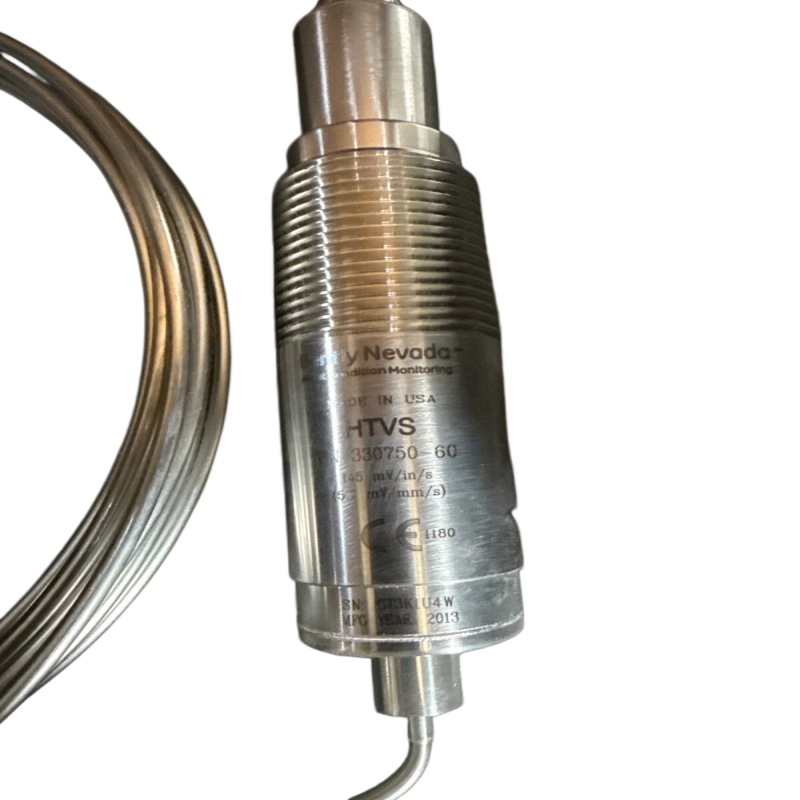
The Bently 330750-60 is part of the 3300 XL 8 mm Proximity Transducer System designed for continuous monitoring of vibration and shaft position in rotating machinery.

First hand source, affordable price. Spot inventory!
•Shipping Port: Xiamen
•Manager: Rhonda
•E-mail: xrjtina@gmail.com
•Tel: + 86-15359273796(WhatsApp)
•Ship to you via Fedex/DHL/TNT/UPS/EMS
•Package: Original packing with cartons
The Bently 330750-60 is part of the 3300 XL 8 mm Proximity Transducer System designed for continuous monitoring of vibration and shaft position in rotating machinery. Manufactured by Bently Nevada, this probe is widely used in critical industrial environments where reliability, accuracy, and machine protection are essential.
The 330750-60 is an 8 mm eddy current proximity probe used to measure shaft vibration and displacement without physical contact. It acts as the front-end sensor in a complete proximity transducer system.
A full monitoring channel typically includes:
Together, these components provide precise real-time machine condition monitoring.
The probe uses eddy current sensing technology to measure the distance between the probe tip and a conductive shaft surface.
Working process:
This allows micrometer-level precision without mechanical contact.
The Bently 330750-60 is used in industries requiring continuous machinery protection:
Common monitoring parameters:
Note: Exact specifications may vary depending on system configuration.
Bently Nevada part numbers contain configuration details such as:
The “-60” in the model number typically indicates a 60-inch (≈1.5 m) integral cable length, one of the most common configurations used in industrial installations.
The probe cannot operate alone. It must be used with:
When combined, they form a complete displacement and vibration monitoring channel.
The 3300 XL series is considered an industry standard for machinery protection due to:
The Bently 330750-60 Proximity Probe is a critical component for modern predictive maintenance and machine protection systems. It delivers precise non-contact measurement of shaft vibration and displacement, helping prevent costly downtime and ensuring safe, reliable operation of rotating equipment.